
Holy Church of Saint Demetrius in Mavrilo

Holy Church of Saint Demetrius in Mavrilo

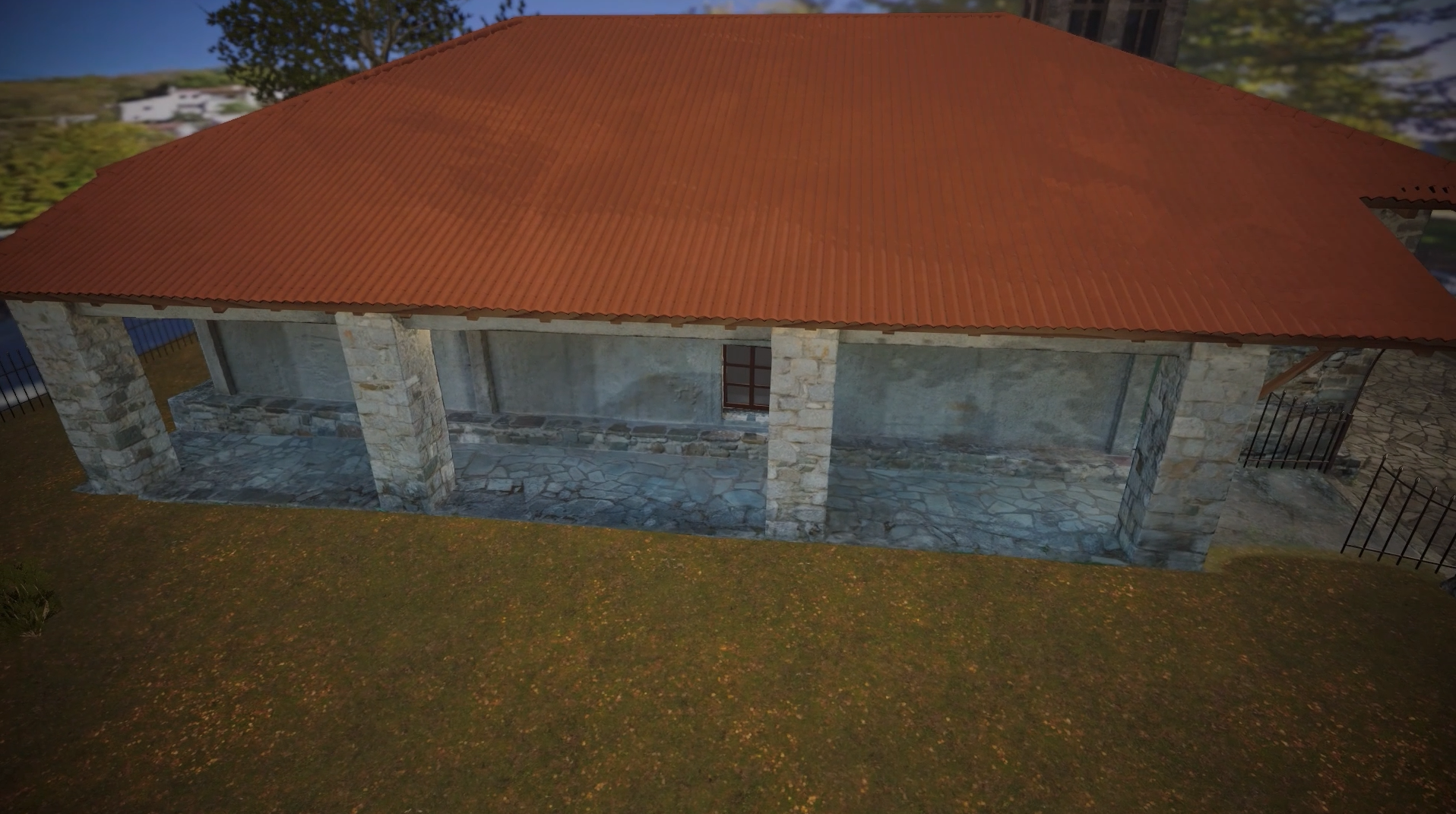
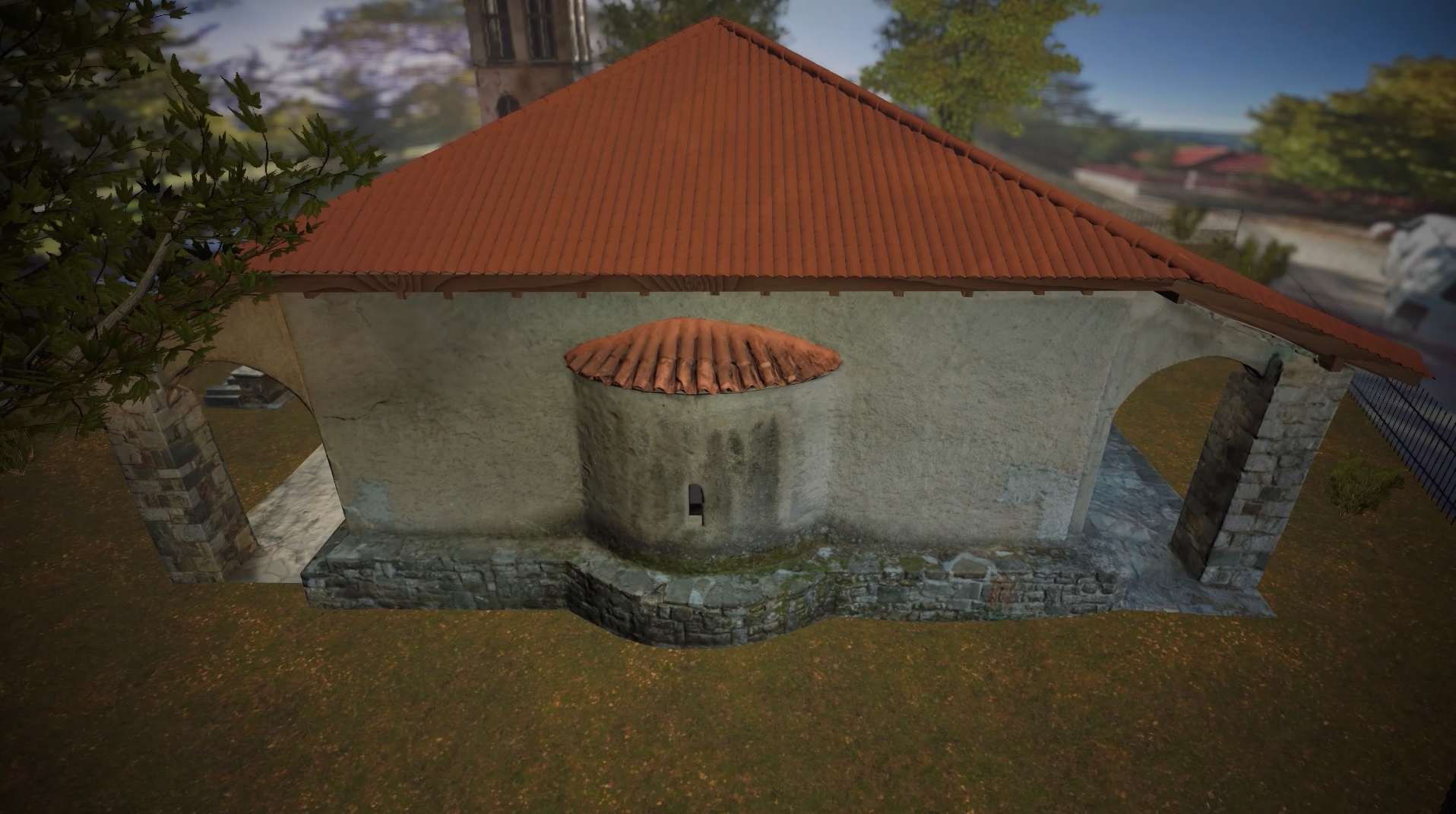
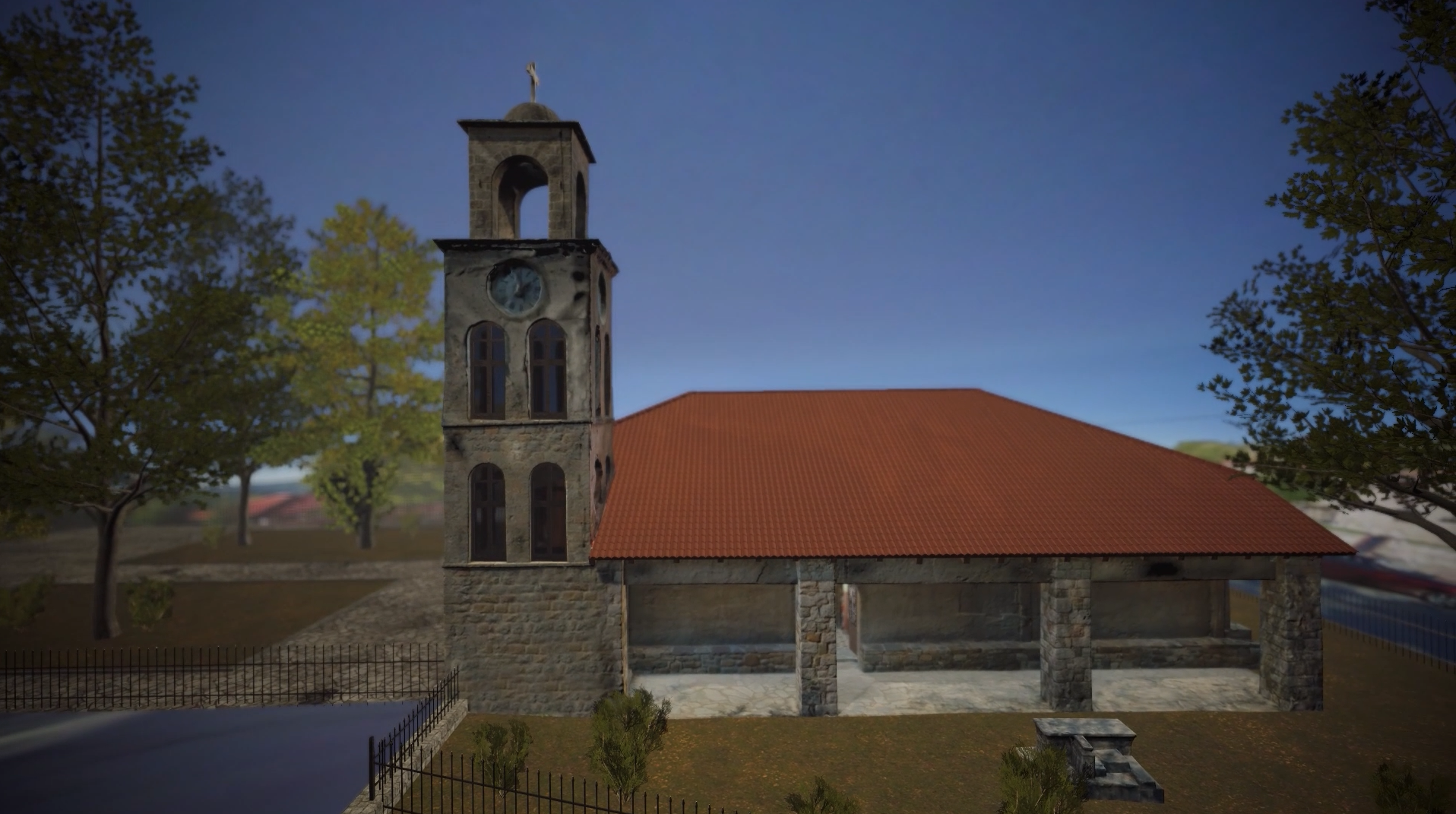
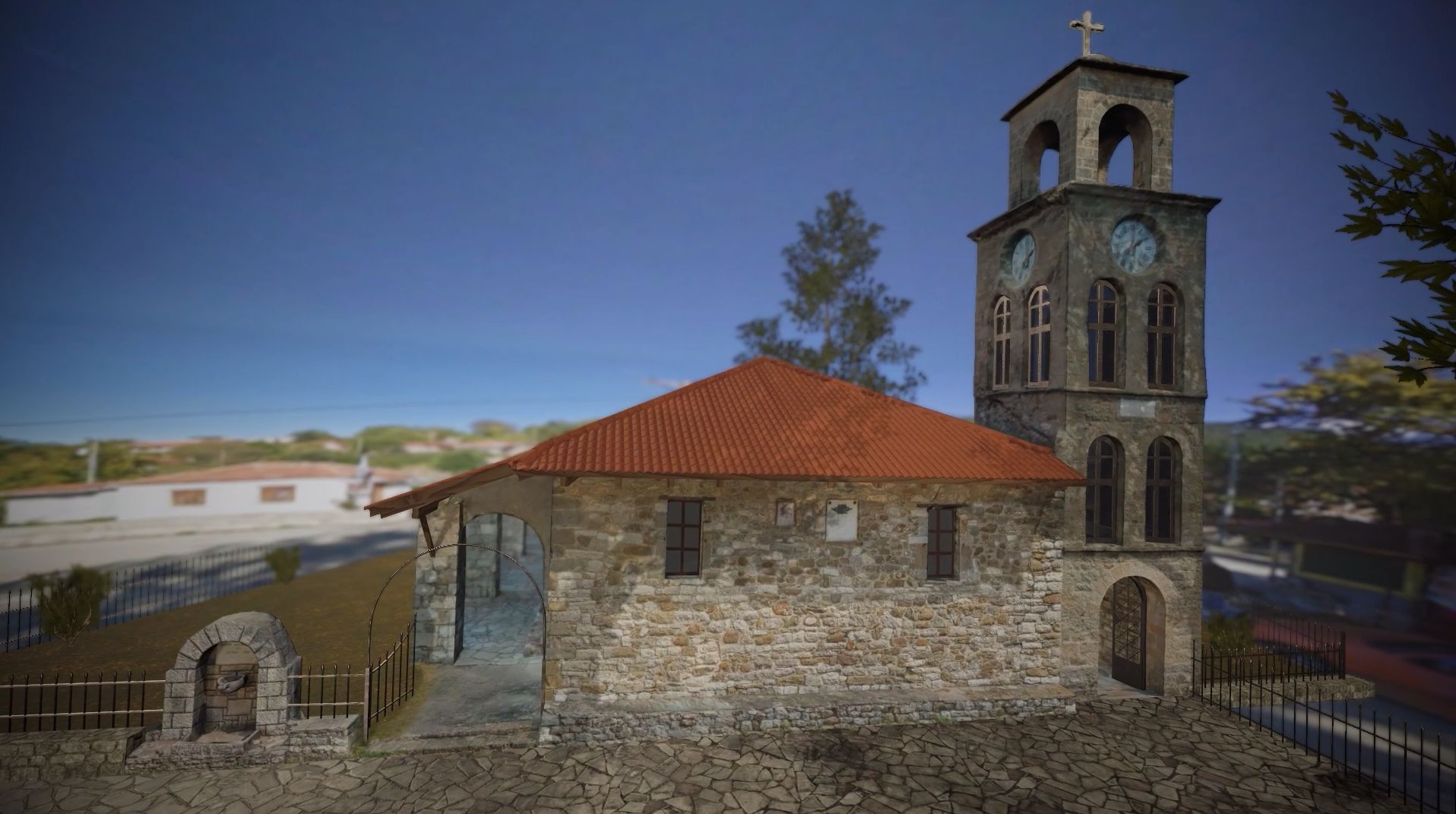
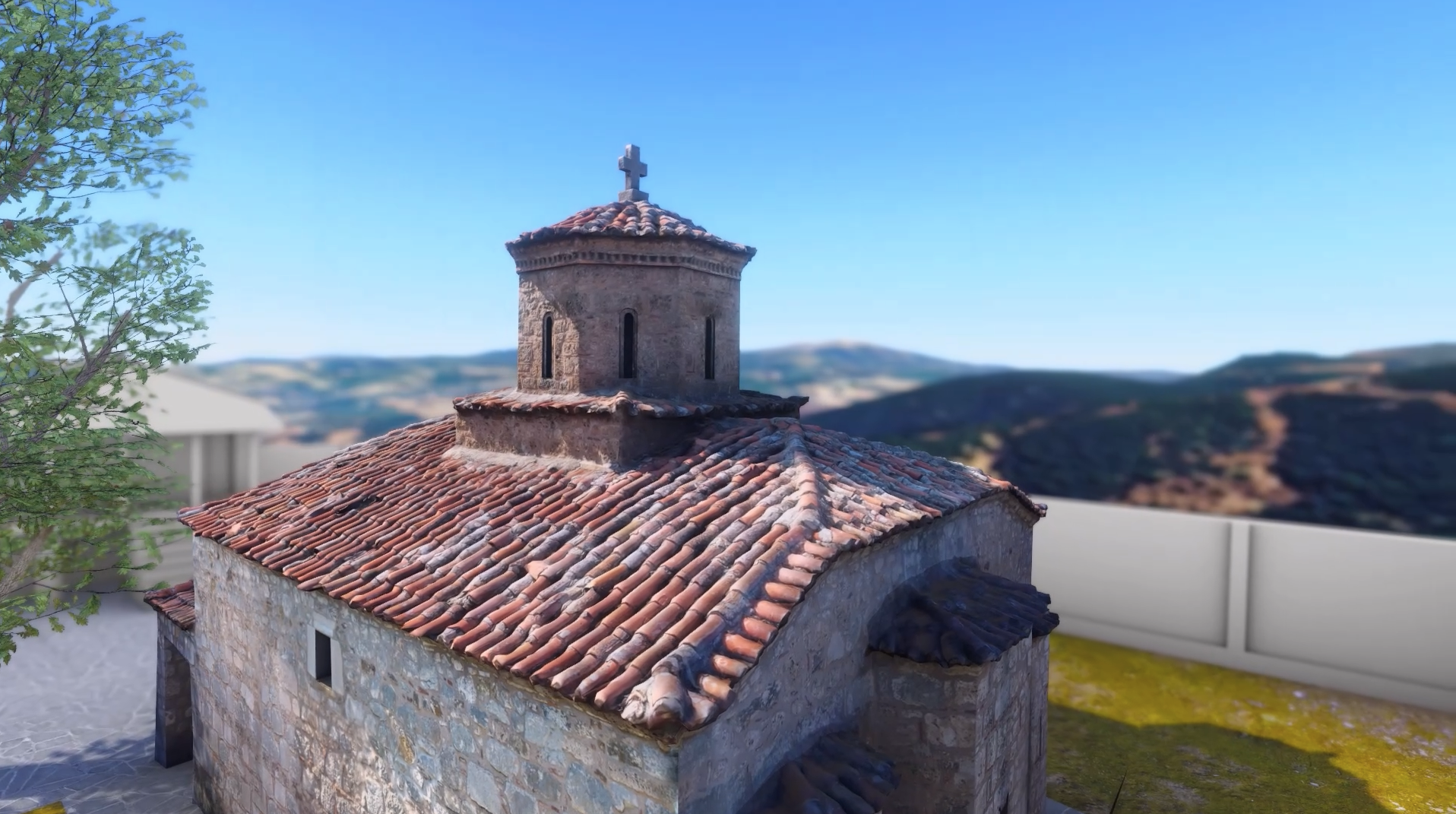
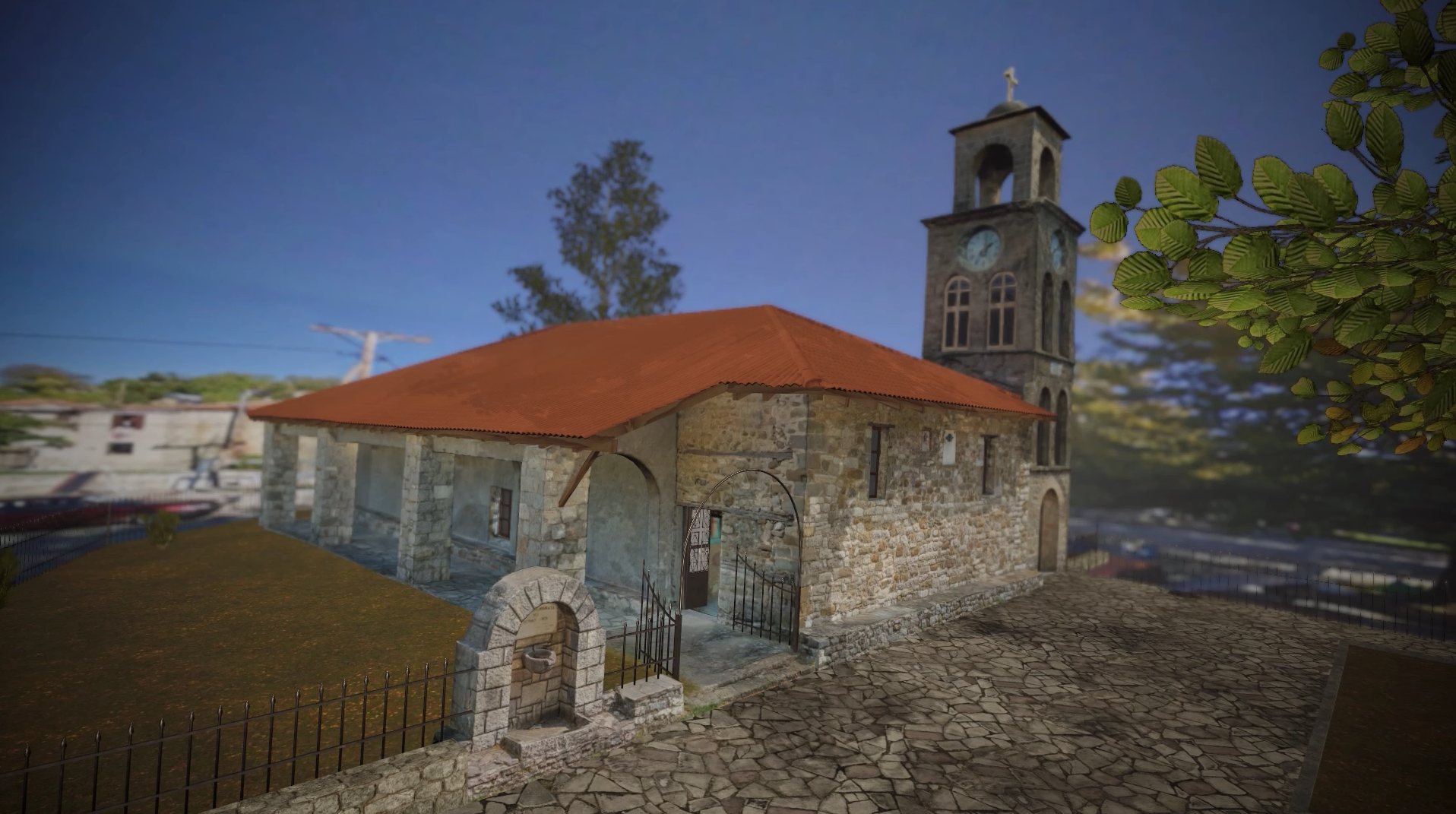
The Church of Saint Demetrios is the parish church of the village of Mavrilo. It stands on the south side of the village’s spacious central square and was built in 1728. It is a basilica with stone walls and a wooden, tiled, four-sided roof. Along the long sides, lean-to roofs extend from the main roof of the church, supported by large concrete piers. The west wall was rebuilt in 1853, while the four-storey stone bell tower was added in 1963. 


The entrance to the narthex is on the north side of the church. The floor of the narthex is raised above that of the nave and is separated from it by a wall with a wooden frame. Above the narthex is the women’s gallery, which explains the low ceiling of the narthex. A wooden staircase inside the narthex leads up to the gallery.


The nave is divided into three aisles by two rows of wooden columns crowned with capitals and supporting successive elliptical arches. The carved wooden furnishings are of exceptional artistry: the pulpit on the left, the proskynetarion and the bishop’s throne on the right, the suspended choir loft hanging from the central ceiling medallion and encircling the chandelier, and the impressive gilded templon, which—according to its inscription—was completed in 1735 by the priest Konstantinos, who also worked on the church’s fresco decoration.


The ceiling of the nave is flat, wooden, and painted. It is divided into rectangular panels with decorative mouldings. At the centre of the sanctuary ceiling, along the east–west axis, a square blue-green panel contains a medallion depicting Christ Pantokrator, echoing the symbolism of the dome in domed churches.


The church is fully painted, with exceptional 18th-century frescoes. The wooden parapet of the women’s gallery is also decorated with frescoes. On the south extension of the west side, a doorway leads to the southern lean-to. A corresponding doorway once existed on the north wall, but it has since been converted into a window.


On the north wall, the founders of the church are depicted holding a miniature representation of the building. The scene is of particular interest both for its inscription and because it shows the original form of the church when it was first built in 1728. It appears that the roof was originally gabled rather than four-sided, and that the lean-to roofs along the long sides were at a lower level than the main roof, whereas today they appear as its extension. The lean-tos originally had wooden supports, and the opening in the north wall—now the window to the right of the founders’ depiction—was originally a doorway. The inscription records the names of the three brothers who donated the church: Christos, Ioannis, and Alexandris.

ΕΤΕΙ ΑΨΚΗ [1728] ΤΑ ΝΗΝ ΟΝΤΕΣ ΣΥΝΔΡΟΜΗΤΕΣ ΚΑΙ ΚΤΗΤΩΡΕΣ ΤΟΥ ΑΓΙΟΥ ΟΙΚΟΥ ΤΟΥ ΑΓΙΟΥ ΕΝΔΟΞΟΥ ΜΕΓΑΛΟΜΑΡΤΥΡΟΣ ΔΗΜΗΤΡΙΟΥ ΤΟΥ ΜΥΡΟΒΛΗΤΟΥ. ΔΙ' ΕΞΟΔΟΥ ΑΥΤΩΝ ΚΑΙ ΔΑΠΑΝΗ ΔΥΛΑΔΗ (Ο ΚΥΡ) ΧΡΙΣΤΟΣ, ΑΛΕΞΑΝΔΡΙΣ, ΙΩ(ΑΝΝΗΣ) ΙΕΡΕΥΣ ΚΑΙ ΣΑΚΕΛΑΡΙ(Σ) ΑΥΤΑΔΕΛΦΟΙ


Above the doorway in the south wall is a long dedicatory inscription naming not only the donors but also the painters of the church. It repeats the date 1728 and mentions the Metropolitan of Nea Patra (Ypati), Nikiforos. The donors—brothers Christos, Ioannis, and Alexandris—are described as “mylonopoula,” (the sons of the miller), a detail that links the history of the Church of Saint Demetrios with the history of the local gunpowder mills.


Among the saints depicted in the fully painted church is Saint Apostolos the New, shown to the left of the Archangel Michael, who frames the doorway and the dedicatory inscription. Apostolos was a young neomartyr who suffered martyrdom at the age of nineteen in Constantinople in the late 17th century. Because his martyrdom was still relatively recent at the time of the church’s construction and decoration—and his veneration and iconography had not yet spread widely—his depiction is accompanied by a detailed, small-script inscription recounting his story. This is one of the earliest, if not the earliest, surviving depictions of this neomartyr, whose feast is celebrated, as the inscription notes, on 16 August.


The nave is separated from the sanctuary by a gilded carved-wood templon enriched with painted decoration. Its inscription reads: “Completed was this radiant work, that is, the holy templon of the glorious Great Martyr Demetrios, by the hand of Konstantinos the priest, in the year of Christ 1735.” Konstantinos, as noted earlier, also worked as a painter in the church, and the date shows that the carved decoration was completed a few years after the construction and painting of the church.


The patron saint is depicted on the north wall of the church, but not in his more common iconographic type—mounted on horseback. Here he appears enthroned, a rarer type. His military identity remains evident, as he is shown wearing a Roman scale cuirass, holding a spear in his right hand and a bow with arrows in his left.

Holy Church of Saint Demetrius in Mavrilo
Name Holy Church of Saint Demetrius in Mavrilo
Region Municipality of Makrakome
More Monuments