
Holy Church of Panagia Despina
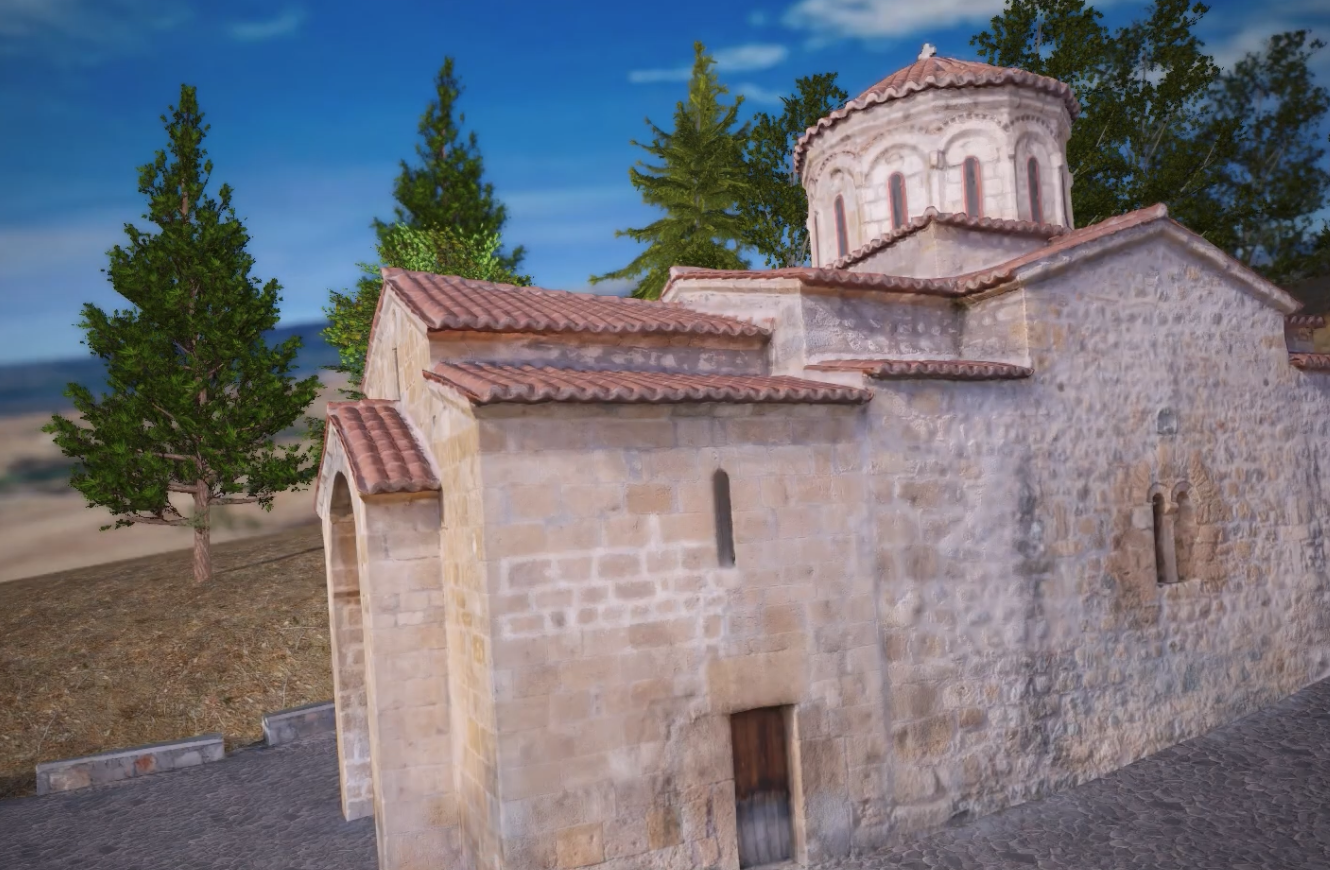
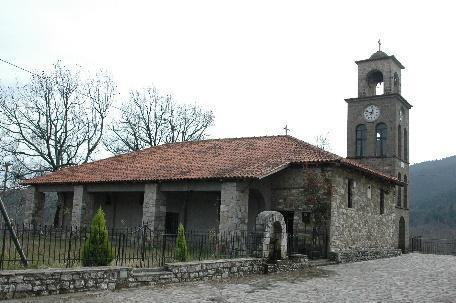
The Church of Panagia Despina has been one of the parish churches of Lamia since 1833, built near the castle. It is an eighteenth‑century three‑aisled basilica constructed on the site of an earlier church.
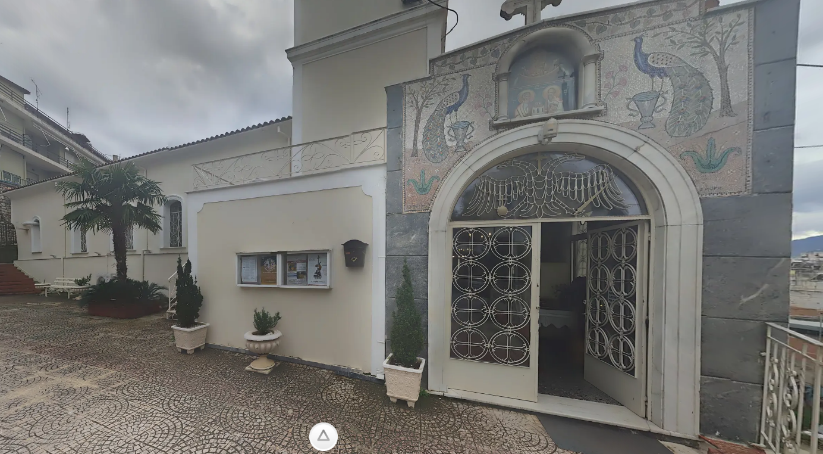
The exterior walls of the church are covered with later plaster, and the roof is tiled. On the north and south sides rise twin bell towers, which until 1937 stood at the northwestern and southwestern corners of the west side of the church. In that year, based on designs by the architect Athanasios Demiris, the present entrance of the church and the women’s gallery were added.
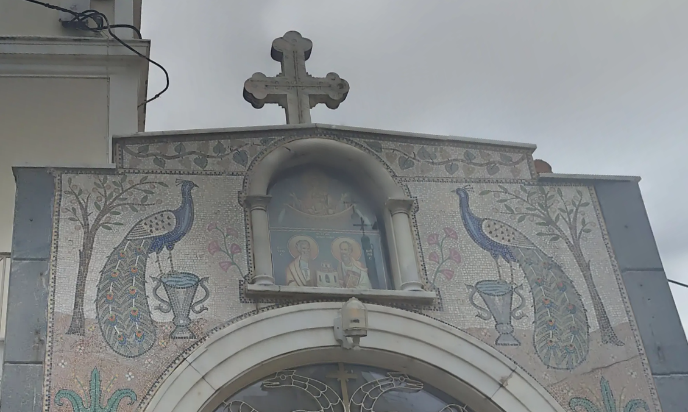
According to tradition, the earlier church that stood on the site of Panagia Despina was dedicated to the Apostles Peter and Paul. In addition, at the southern end of the Sanctuary there is a chapel dedicated to the Life‑Giving fountain. The history of this double dedication is depicted in the decoration of the conch above the entrance of the church, where the Apostles Peter and Paul are shown holding a model of the church beneath an image of the Virgin Mary as the Life‑Giving fountain. The mosaic with the paradisiacal peacocks crowning the entrance is a recent work, created in 1993 by the artist Theodoros Moris, who has worked in many churches of Phthiotis.
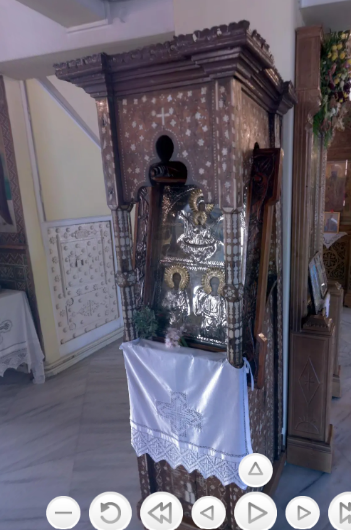
The entrance of the church is located at the northwestern corner. Entering and moving toward the interior, the visitor sees the elaborate carved wooden proskynetarion, with details of inlaid ivory. The same artistic style appears in other parts of the church’s carved wooden decoration, such as the bishop’s throne. The silver‑revetted icon on the proskynetarion is two‑tiered, as is the icon above the entrance. In the lower tier are depicted the Apostles Peter and Paul, and in the upper tier the Virgin Mary as the Life‑Giving fountain.
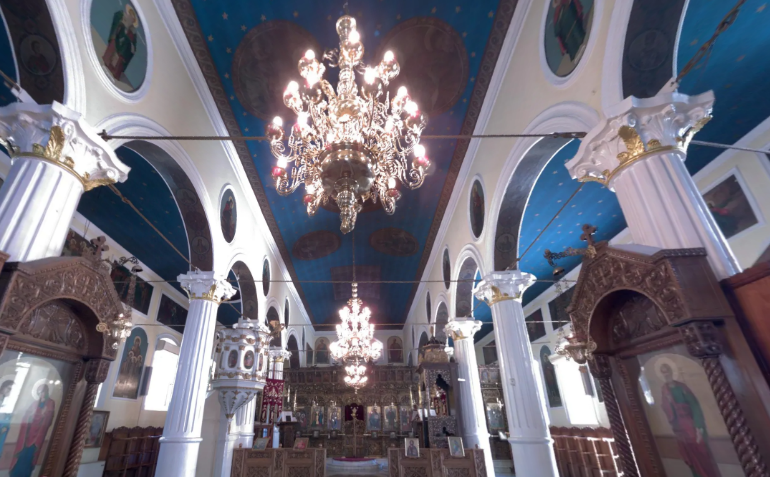
The three aisles of the church are separated by two arcades supported on masonry columns. The columns are covered with plaster and have decorative flutings imitating marble columns. The central aisle is roofed with a barrel vault, while the side aisles have flat roofs.
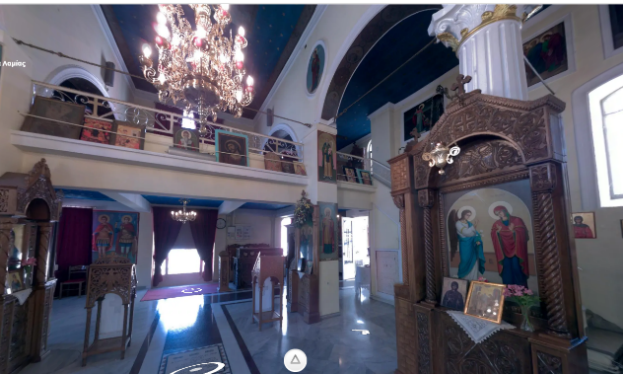
On the west side of the church is the women’s gallery, accessible by a staircase on the north side. The gallery was created in 1937, when the church was extended westward.
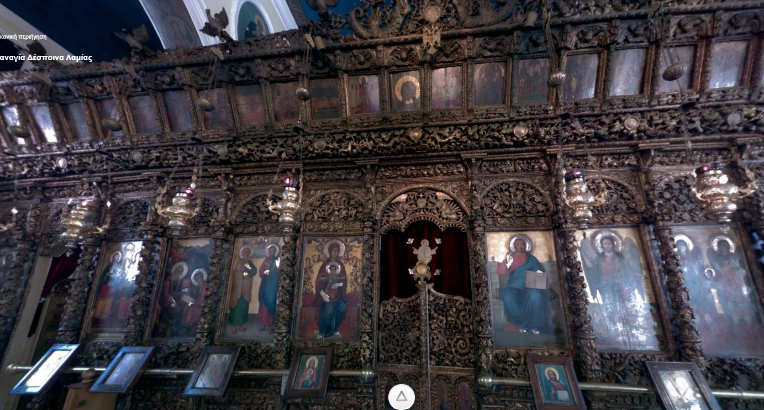
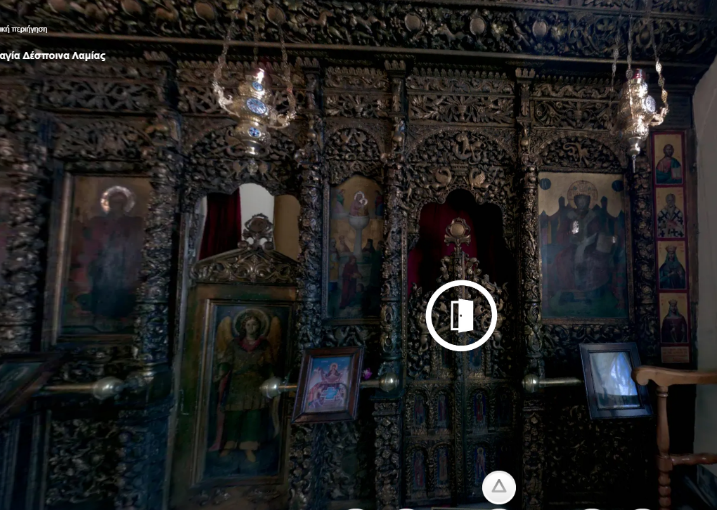
The elaborate templon of Panagia Despina is one of the oldest carved post‑Byzantine templons preserved in Phthiotis. It is gilded and covered with high‑quality carved decoration, dominated by intertwining and interlacing vines and floral motifs. Among these vegetal patterns appear birds and animals with symbolic meaning in Christian iconography—such as doves and lambs—as well as angelic and sacred figures. The middle tier, where the despotic icons are placed, is formed by carved wooden colonnettes supporting arches decorated with flowers and birds, highlighting each icon individually.
To the left and right of the Beautiful Gate are placed, as customary, the icons of the Virgin and the Child and of Christ enthroned in blessing. To the left of the Virgin and the Child are the icons of the Apostles Peter and Paul, John the Theologian dictating to Saint Prochoros, the Holy Unmercenaries with a dedicatory inscription: “At the expense of Afroditi D. Gourgiotaki, 25 March 1863”, Saint Nicholas with a dedicatory inscription: “At the expense of Elias Tsamtsis, 1882”, and finally All Saints with a dedicatory inscription: “At the expense of Eleni Theodorou Fotopoulou, 1887”. To the right of Christ enthroned are placed the icons of John the Forerunner with a dedicatory inscription: “Gift of Ioann. Bakogiannopoulos, Lamia, 21 August 1891”, the Archangels, and Saint Barbara, which marks the transition to the templon of the chapel of the Life‑Giving fountain.
The section of the templon from the icon of Saint Barbara to the south wall of the church is the templon of the chapel of the Life‑Giving fountain, with its own Beautiful Gate with a carved wooden sanctuary door and a north deacon's door. Although it appears unified with the rest of the templon, it shows certain differences. This is seen mainly in the carved arches crowning the icons in the tier of the despotic icons: their arches are lower than those of the main templon. Flanking the Beautiful Gate are placed the icons of the Life‑Giving fountain on the left and of Christ the Great High Priest on the right.
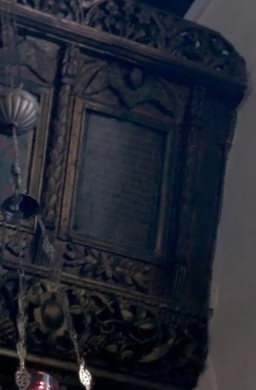
At the right end of the upper tier of the templon, in a frame like all the icons of this tier, is placed a written dedicatory inscription, which records the date of construction, 1739, and the total cost of the templon’s work, 900 grosia. Some scholars believe that the templon of the chapel of the Life‑Giving fountain is older and that the inscription may refer only to that part, while the rest of the templon was completed slightly later. The full text of the inscription is:
“I do not speak of the labor of this work in writing; God knows, for He knows all things. This present templon was carved, decorated, gilded, and adorned through the contributions, expenses, and great diligence of the most honorable and noble lord and steward, Kyr‑Kyr Chantzifilos, Protokekdikos, son of the late Chantzipolyzois, during the archiepiscopate of the most beloved‑of‑God Bishop of Zitouni, Kyr‑Kyr Anthimos, and during the service of the most reverend Kyr‑Kyr Nikiforos, nephew of Chantzifilos. Year APSLΘ (1739), November 14. All expenses were made: for the wood, for the carving, for the gold, for the gilding, and for the icons — nine hundred grosia, that is, nine hundred.”