
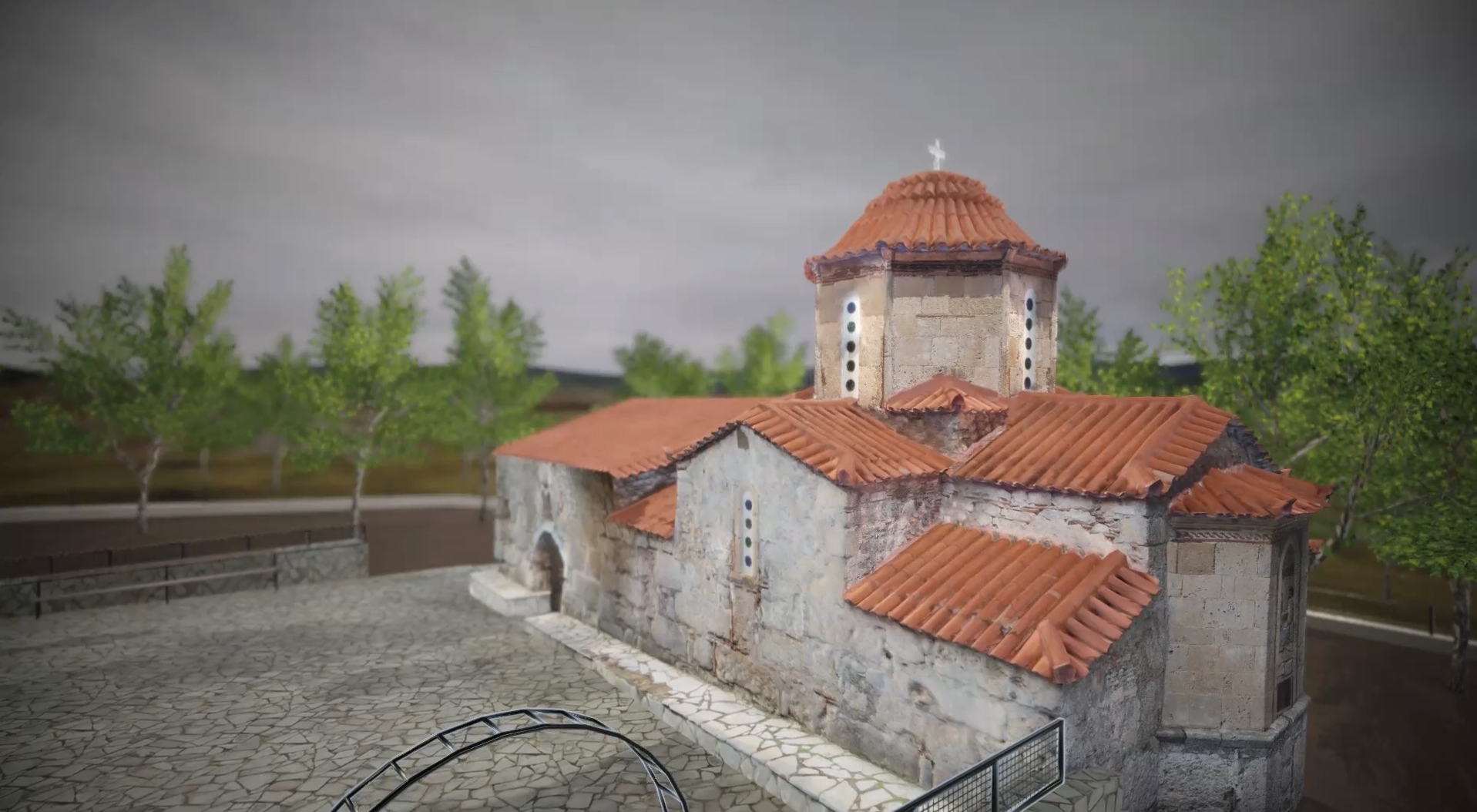
Holy Church of Saint Nicholas in Exarchos
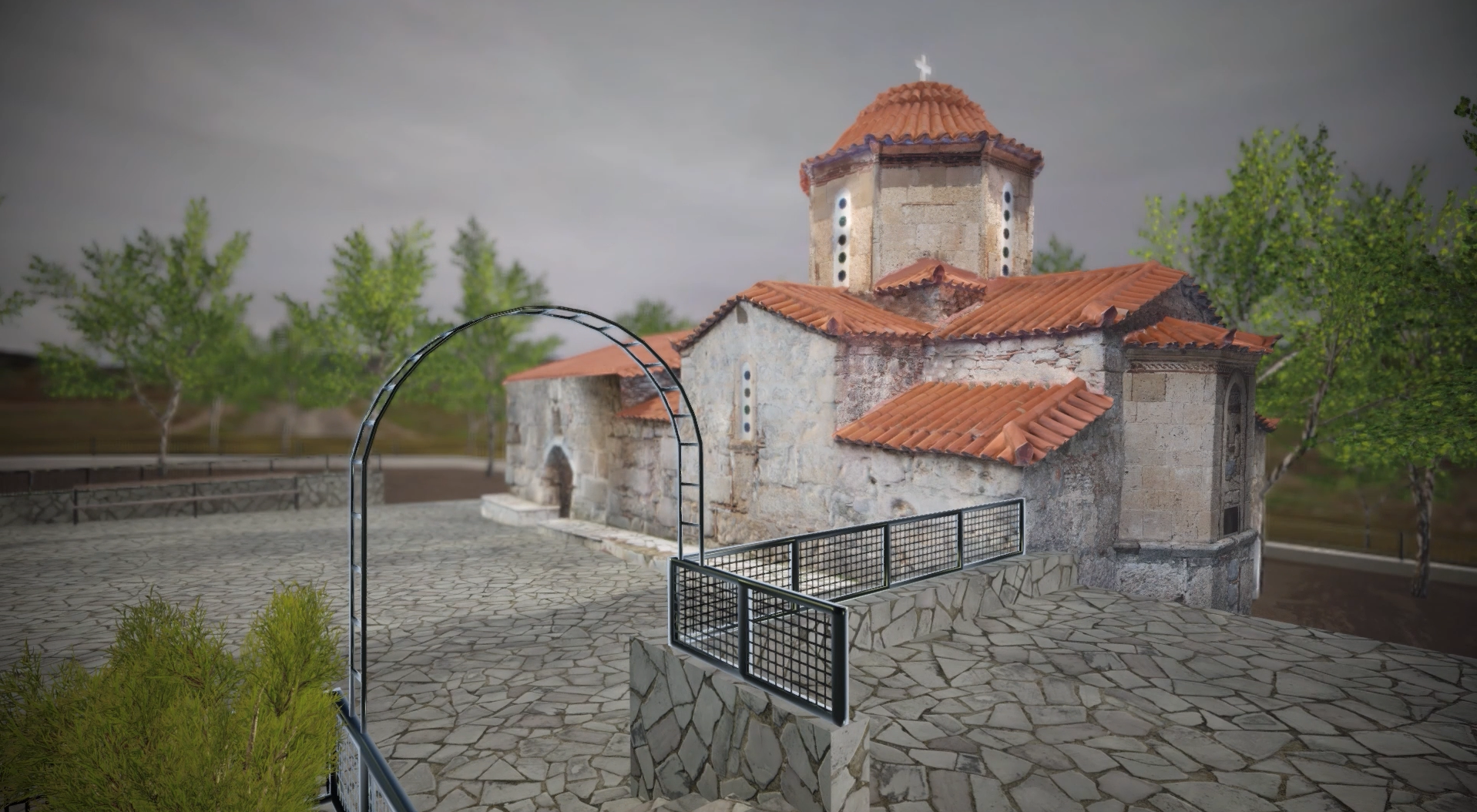
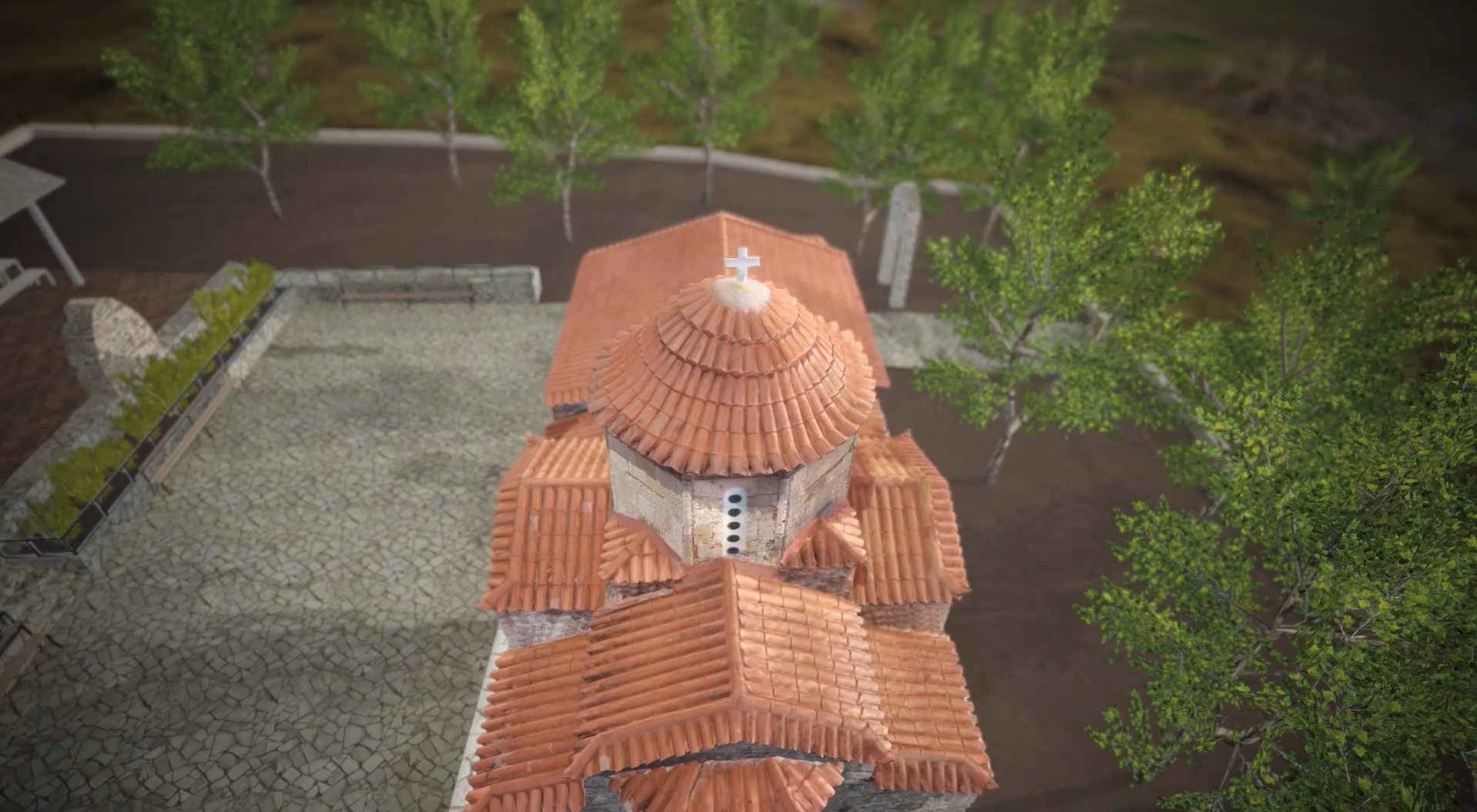
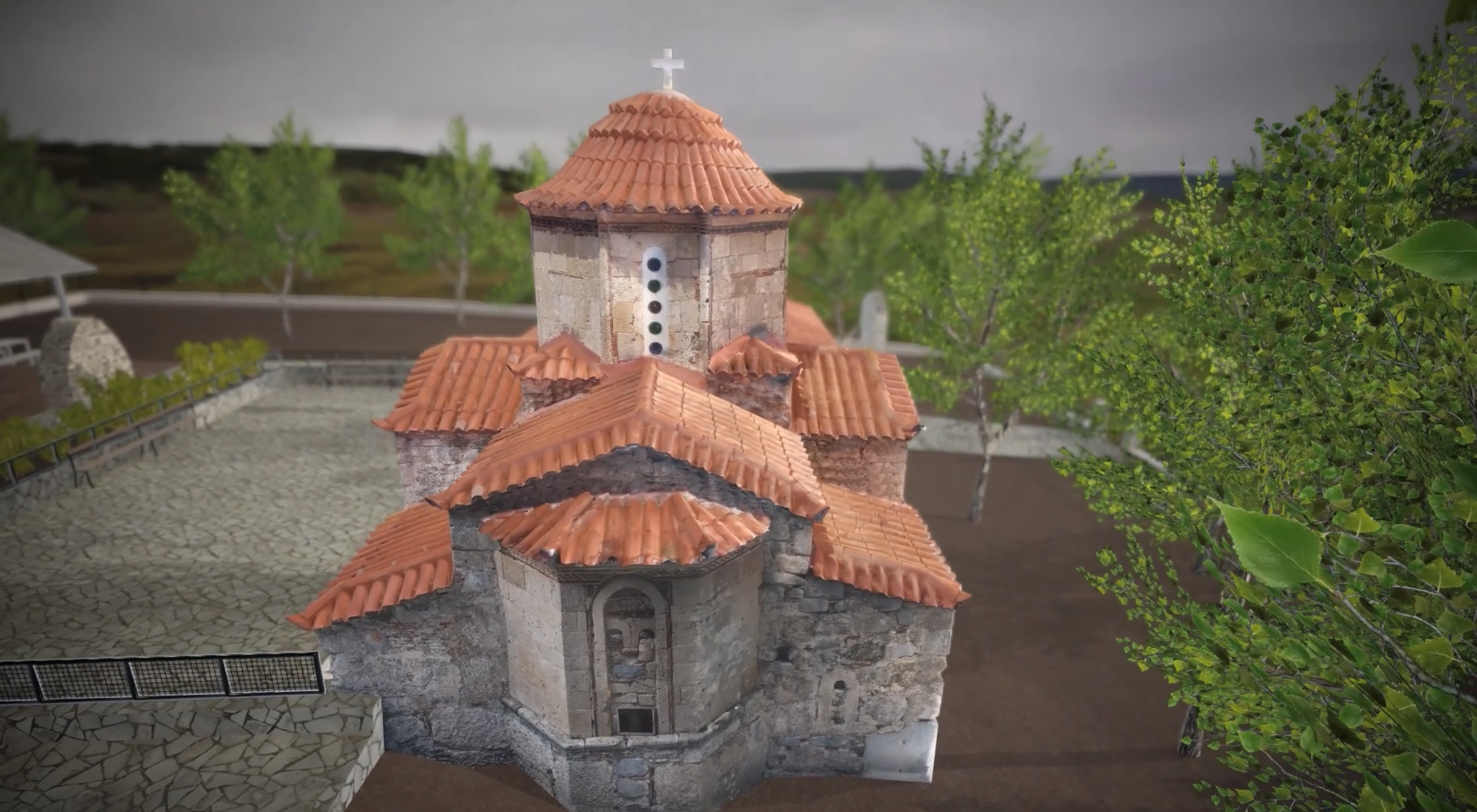
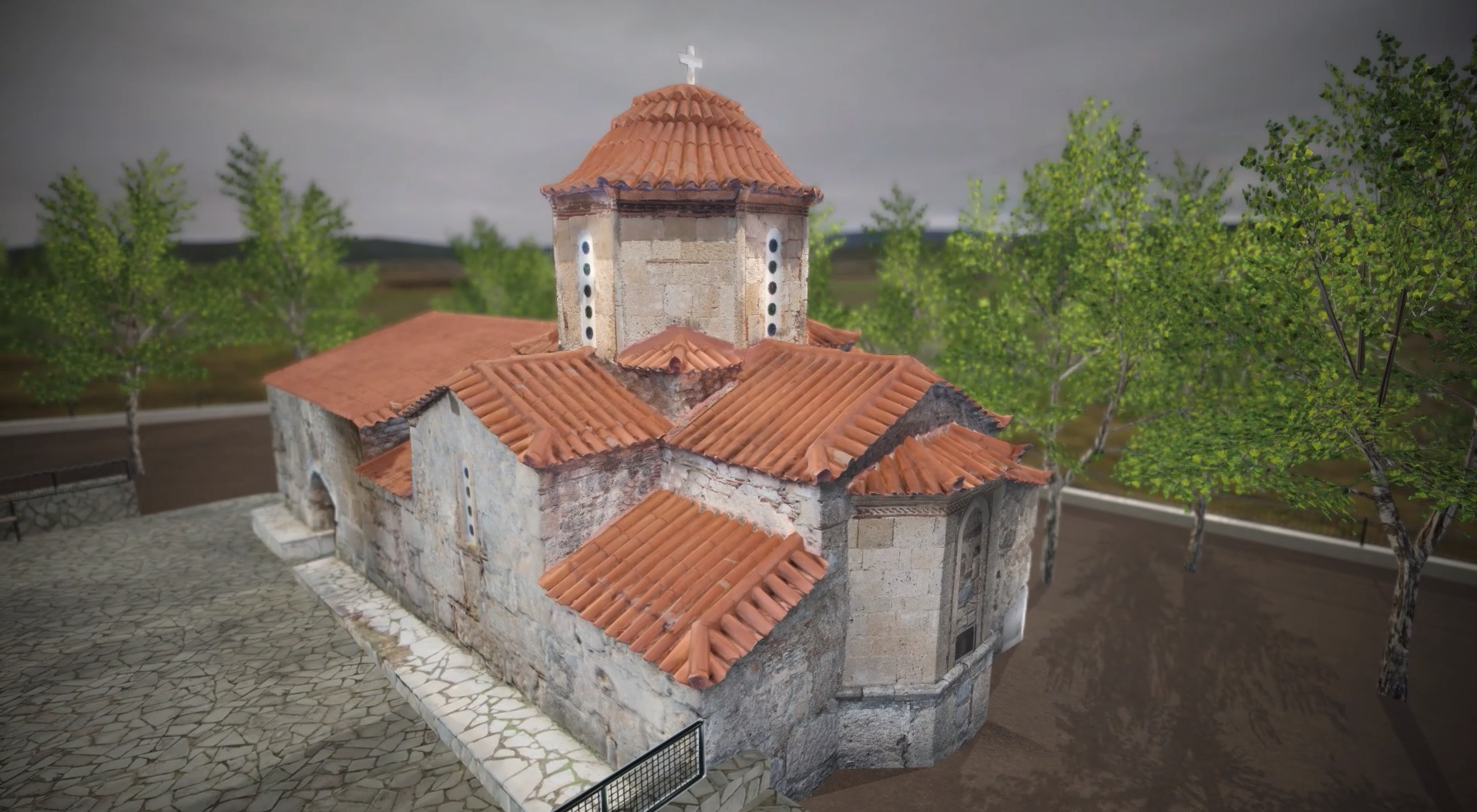
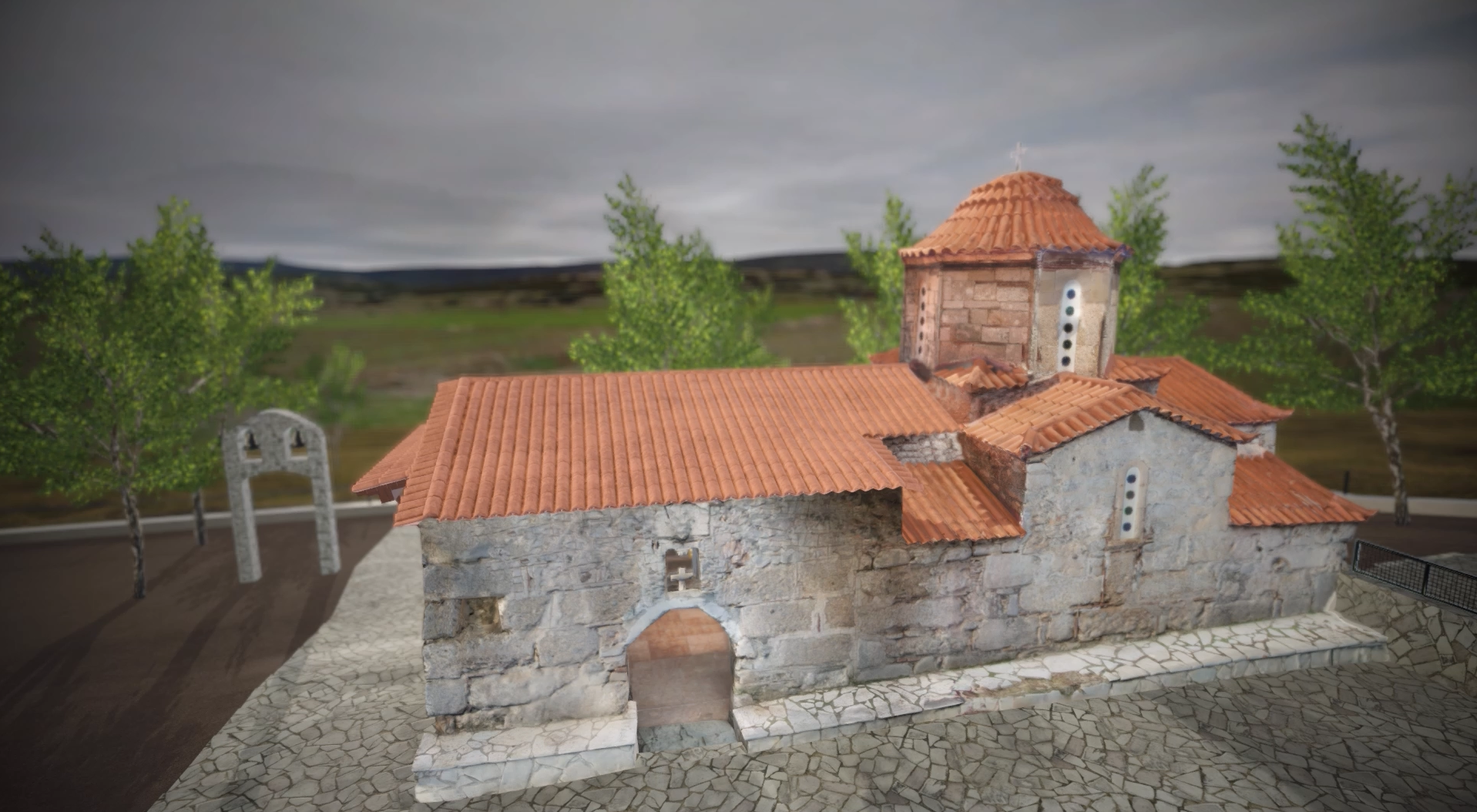
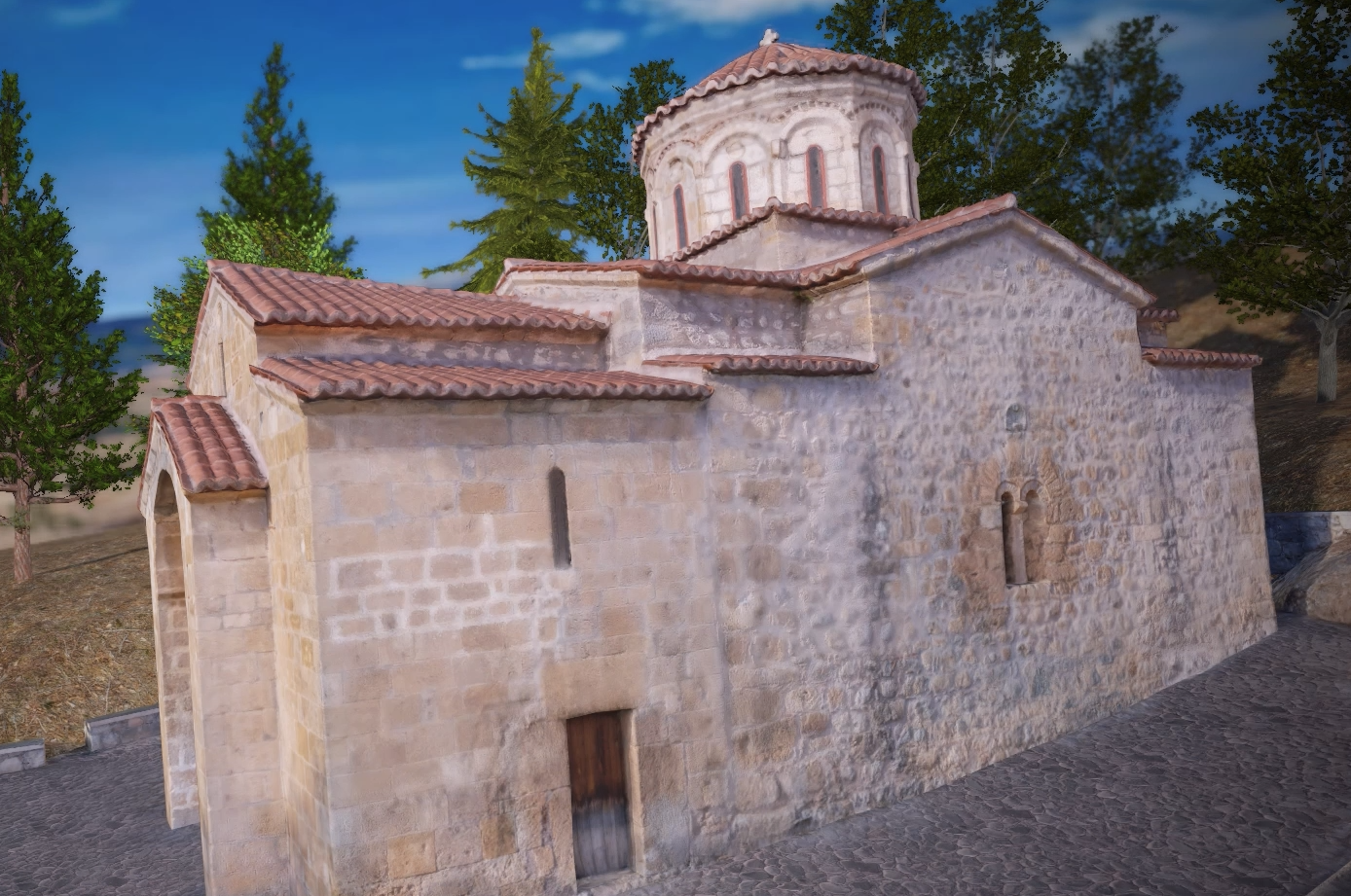
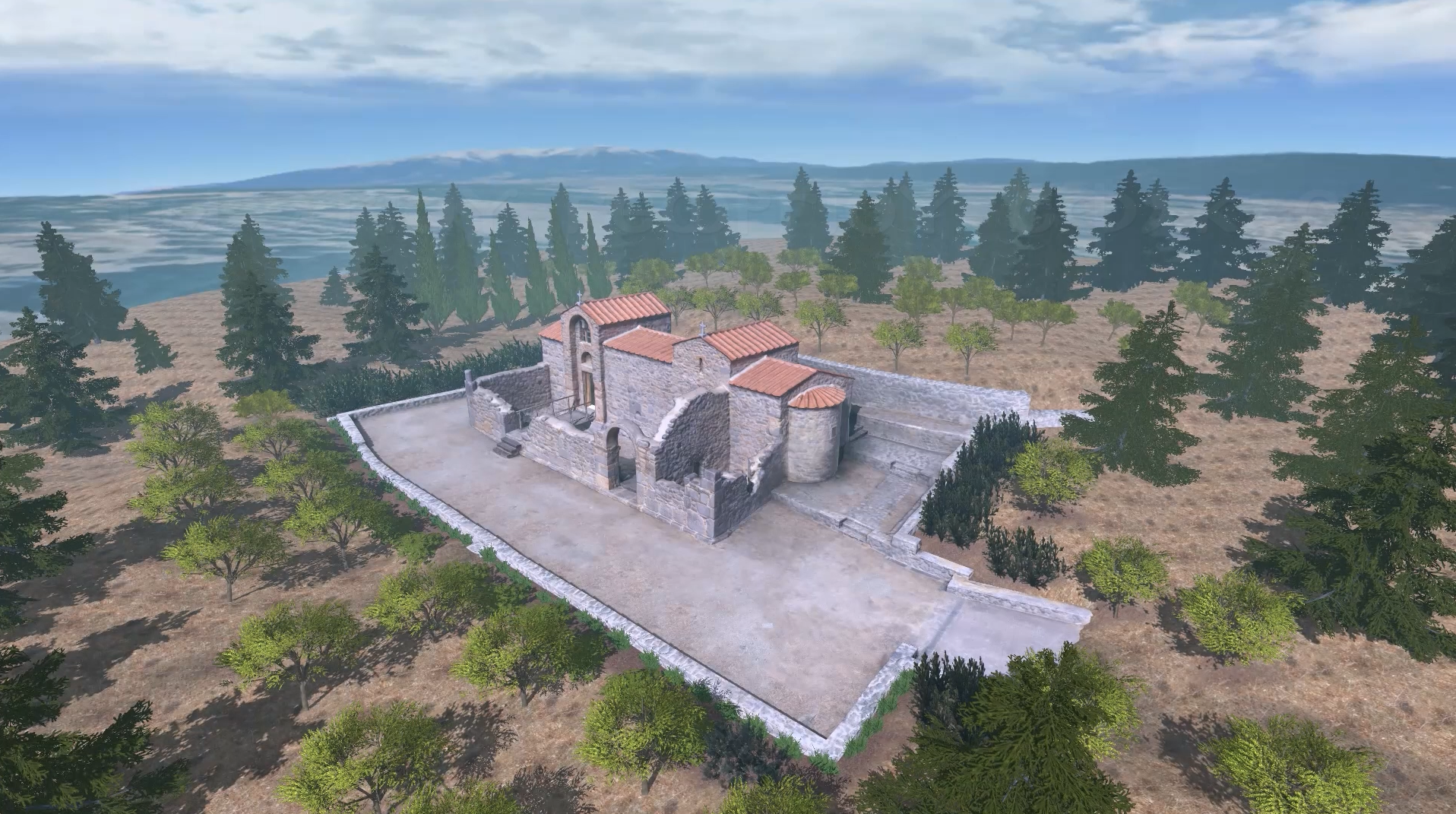
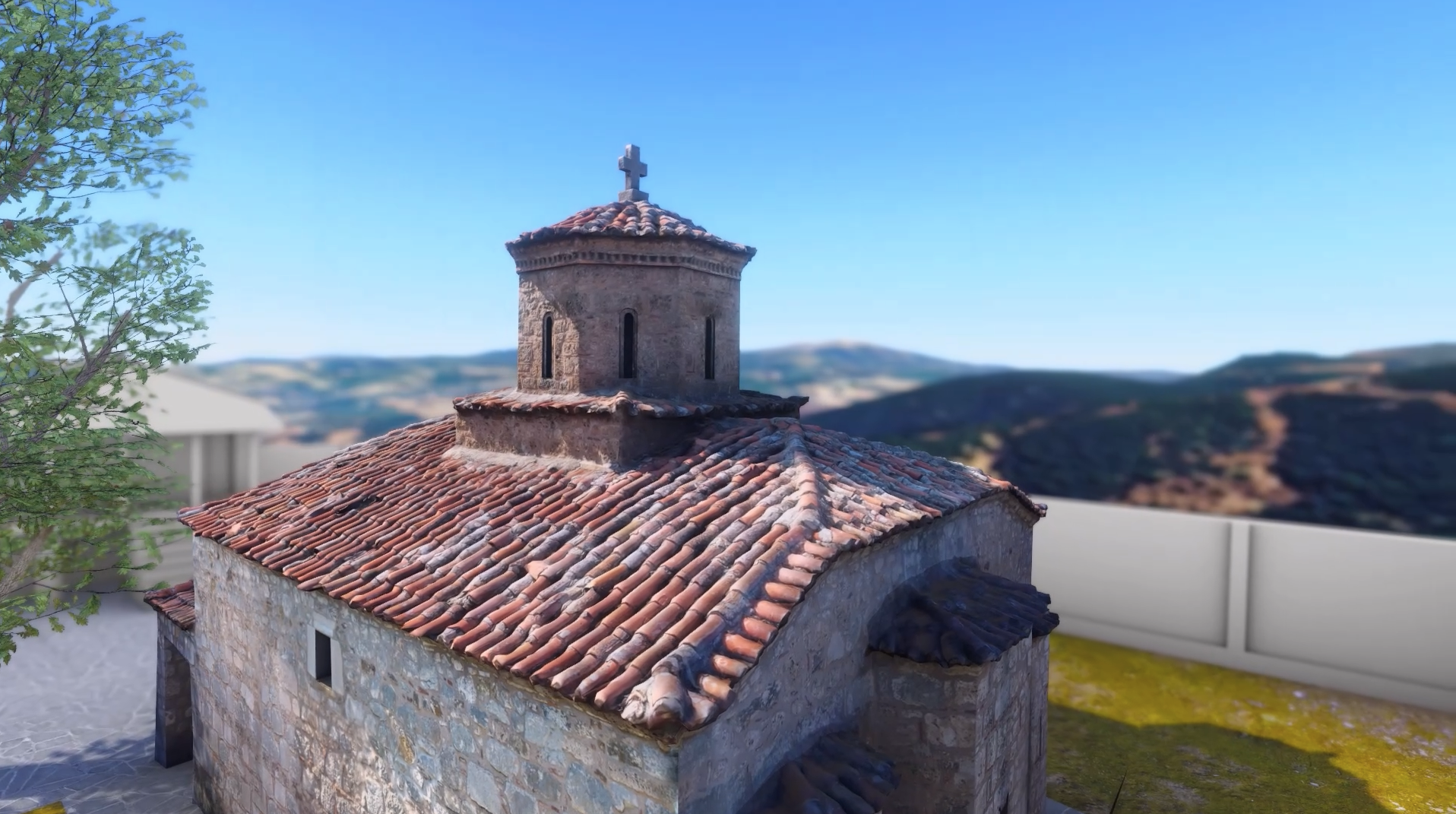
The Church of Saint Nicholas stands a short distance from the village of Exarchos, between the ancient cities of Hyampolis and Abae in the region of Locris. It is dedicated to Saint Nicholas the New—also known as “of Vounena”—a Byzantine soldier who was killed in the early 10th century, possibly during the Arab raid on Demetrias in 901–902, and who came to be venerated as a martyr and local saint. The nave follows the cross-in-square plan. The cross shape is strongly emphasized in the roofline, because the roofs of the corner bays are noticeably lower. The church has an octagonal dome and a three-sided sanctuary apse to the east. The narthex, as it survives today on the west side, appears to be a later addition, perhaps replacing the original narthex of the church.
In the masonry of the church we see a combination of rubble construction and carefully worked ashlar. Rubble masonry uses unworked stones bonded with mortar. In the lower parts of the walls, however, large blocks and well-cut stones from ancient buildings in the area were reused. In certain places—such as on the south wall beneath the window, and also on the north wall—the stones were arranged to form crosses, further emphasized by the placement of bricks outlining their contours. These features lead archaeologists to date the church to the late 12th or the 13th century.
The dome is octagonal and, unlike the walls of the church, is built entirely of dressed stone. At its corners, built half-columns are incorporated. Below the eaves runs a band of ceramic decoration—ornamental motifs formed from ceramic elements. The windows are single-arched and are now closed with marble screens, which may have replaced earlier originals.
The sanctuary apse is three-sided. Its lower section, up to the base of the window, is built in rubble masonry like the rest of the church. The upper section, however, is constructed—like the dome—in dressed stone. The transition between the two levels is visually marked by a moulding that encircles the three sides. Although the apse window is now blocked, it is clear that it was originally bilobed, with two small superimposed arches framed by a larger arch. Below the eaves is a band of ceramic decoration. The motif formed by the ceramic elements is called disepsilon, a type commonly used in the 13th century.
The present narthex, preserved in very poor condition, is later than the main church, but it replaced the original narthex, traces of which can still be seen in places on the south side and the southwest corner. However, the arrangement of the entrance on the south side—with its arched lintel and the bilobed window above—is a later intervention. The original entrance to the narthex must have been on the west side.
The interior of the nave must originally have been fully painted, but due to long-term exposure to moisture, most of the fresco decoration has been destroyed. The damaged areas are now covered with limewash. This allows the cross-in-square plan to be seen more clearly inside, with the four arches forming the arms of the cross and supporting the tall dome.
The nave is separated from the sanctuary by a masonry templon, into which marble pieces from the original templon have been incorporated. The surviving frescoes date to the 18th century. To the right of the Holy Door—the main entrance to the sanctuary—Christ is shown enthroned on the right and the Theotokos holding the Child on the left. They are flanked by standing, frontal figures: an Archangel to the left of the Virgin and Saint John the Baptist to the right of Christ. The Baptist is also shown with angelic wings, a motif not uncommon in Orthodox iconography, emphasizing his role as the herald of Christ the Messiah. Above, at the level of the lintel, a continuous band depicts the Great Deesis: Christ in bust form between the Virgin and the Baptist, flanked by the Apostles.
The oldest frescoes in the church date to the late 13th century, but only small fragments survive. In the dome, the medallion of Christ Pantokrator is faintly visible. In the zone immediately below, sacred figures were once shown in medallions; today, the busts of the Theotokos and at least one Archangel can still be discerned. On the cylindrical wall of the drum, twelve Prophets were depicted. Today, Daniel, David, and Solomon can still be identified.
At the level of the window, the figure of Gabriel from the Annunciation can be seen. In the lower zone, later frescoes from the 18th or 19th century survive, with figures framed individually. On the left are two hierarchs—Saint John Chrysostom and probably Saint Nicholas. On the right, in a different and more decorative frame, a mounted military saint is shown, inscribed “the New.” This is most likely Saint Nicholas the New. At the bottom of the scene, a dedicatory inscription is visible, though the donor’s name has not survived.
On the north wall is the depiction of Saint Nicholas the New, to whom the church is dedicated. He is shown as a Byzantine mounted military saint with youthful features. The earliest images of Saint Nicholas the New date from the Palaiologan period and continue into the post-Byzantine era across much of the Balkans. He is sometimes shown with youthful features and sometimes as a more mature soldier with a beard. The mounted depiction of the saint is rare. It is possible that the mounted saint on the opposite wall imitates this representation. There is also a much later copy of this composition on the south wall of the sanctuary. Between the legs of the horse, traces of a dedicatory inscription survive: “Prayer of the servant of God Dimi…”[Dimitrios?].
In the apse conch and on the walls of the sanctuary, further scenes from the older decoration of the church survive, dating to the late 13th century. In the apse conch, the Virgin holding the Child was depicted, flanked by angels. On the apse walls, “concelebrating holy bishops” were depicted—a standard iconographic theme in Byzantine art.
On the north side of the sanctuary apse is the Prothesis, where the Holy Gifts are prepared for the Divine Liturgy. In the conch of the Prothesis of Saint Nicholas, the theme of the “Man of Sorrows” is depicted: Christ shown half-length, standing within a sarcophagus, with closed eyes and crossed hands, while the Cross rises behind Him. This symbolic representation of the Crucifixion, placed in the Prothesis, emphasized the connection between Christ’s sacrifice and the Eucharist. Below the scene, an inscription listing names includes the date 1755. Several structural interventions in the church date to the 18th century and were likely accompanied by extensive repainting.